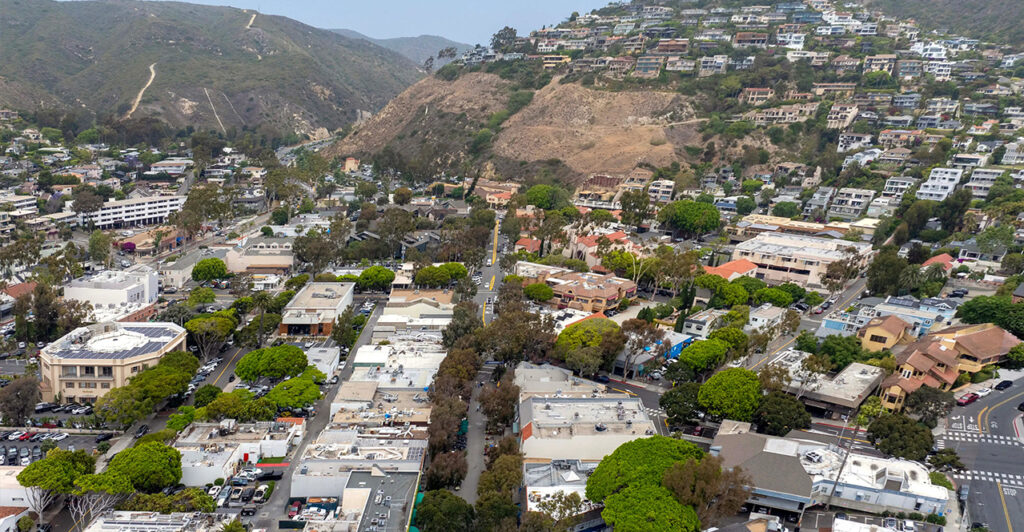
A defining moment on one of Laguna Beach’s most recognizable streets
There has been a lot of conversation recently around the visible changes happening on Forest Avenue.
For many residents and longtime visitors, Forest Avenue has always been more than a downtown street—it is one of the defining public spaces in Laguna Beach.
Its mature trees, walkable storefronts, and connection to the beach have long made it central to the city’s identity. Today, that familiar streetscape is changing.
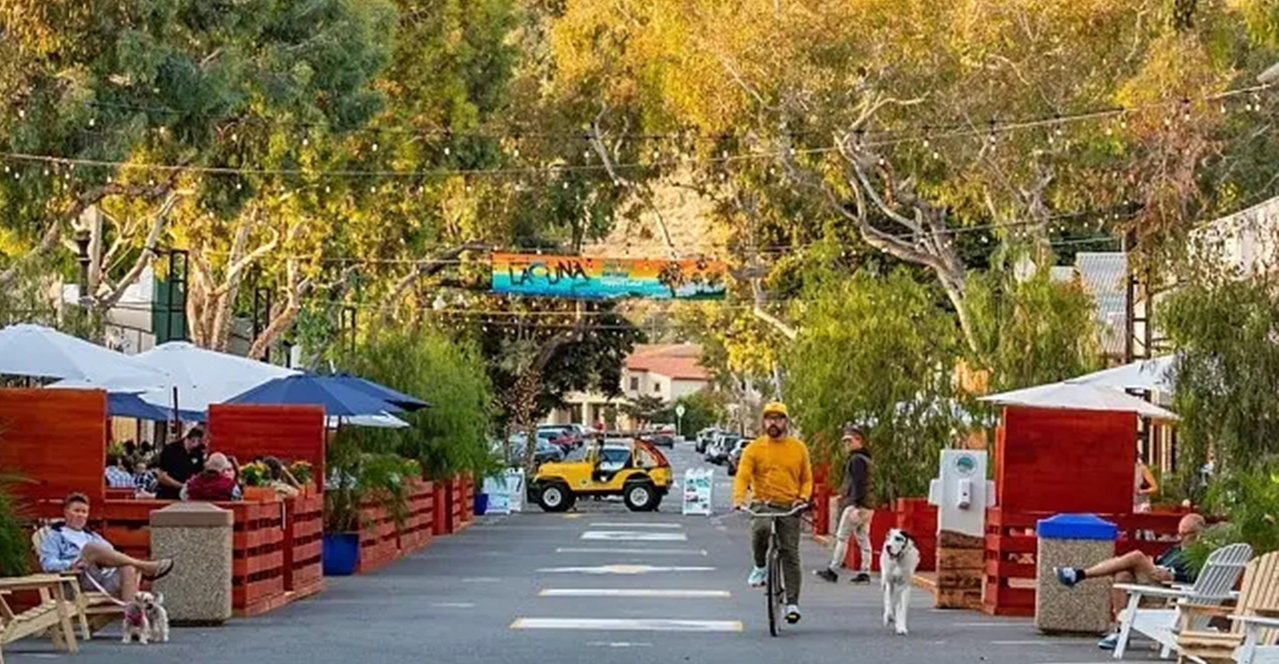
What began as a temporary public space experiment has evolved into one of the most visible downtown improvement projects Laguna Beach has undertaken in years.
What is the Promenade on Forest project?
The city’s Promenade on Forest project is the permanent transformation of Lower Forest Avenue into a more pedestrian-focused public environment.
Originally introduced in 2020 as a temporary street closure designed to support expanded outdoor dining and public gathering space, the promenade quickly became one of Laguna Beach’s most discussed downtown initiatives. What began as a short-term response gradually revealed a larger opportunity: to rethink how this central corridor could better serve residents, visitors, and local businesses long term.
After several years of planning, design revisions, and community input, that vision has officially moved into construction.
The project includes permanent pedestrian improvements, upgraded utilities and drainage, expanded public gathering areas, updated streetscape materials, and a redesigned landscape plan intended to improve both function and long-term usability. The goal is not to fundamentally change Forest Avenue, but to strengthen how it works—creating a more connected and flexible downtown experience while preserving its importance within the city.
Where the project stands right now
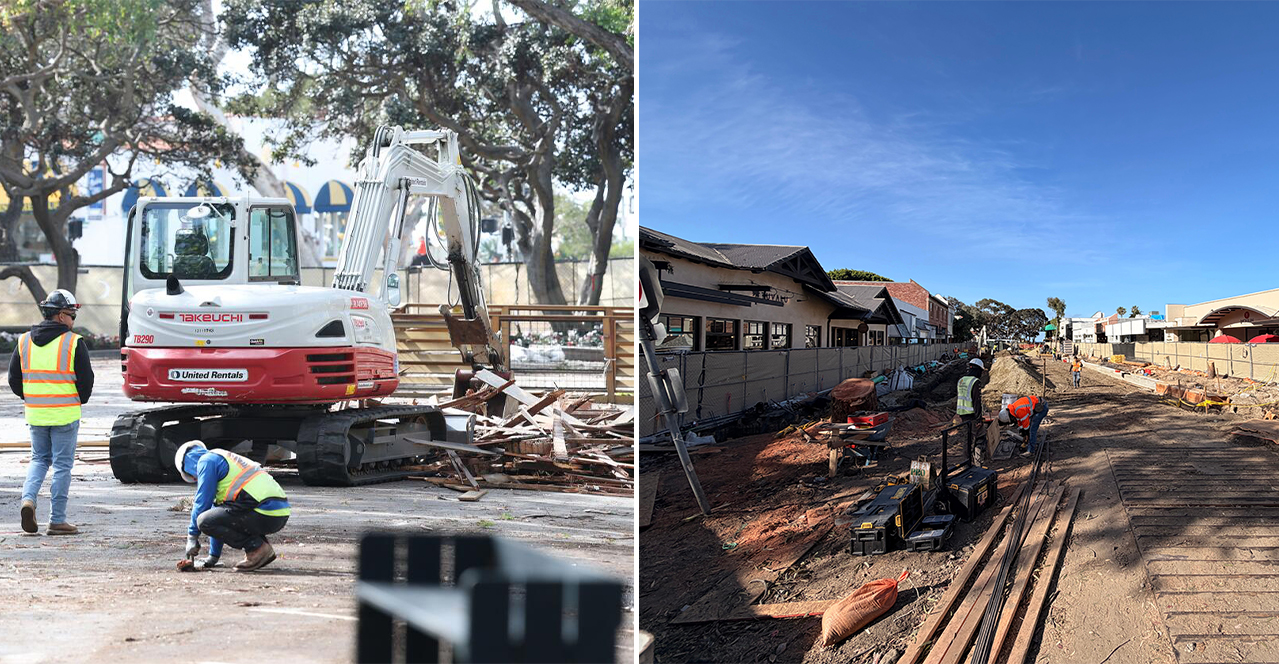
Construction is now well underway, making this the most visible stage of the project to date.
Visitors to downtown Laguna Beach will notice active work throughout Lower Forest Avenue, including street excavation, utility improvements, and ongoing public space reconstruction. Temporary access changes and construction activity have become part of the daily downtown experience as the project moves through its major infrastructure phase.
One of the most discussed recent developments has been the removal of several mature eucalyptus trees along the corridor. According to the city, that decision followed a safety review prompted by a nearby tree failure earlier this year. Independent arborists reportedly determined that several of the remaining trees posed long-term structural concerns, leading to their immediate removal.
While the city framed the decision around public safety, the community response has highlighted how deeply connected residents feel to the existing character of Forest Avenue.
The history behind Forest Avenue’s trees
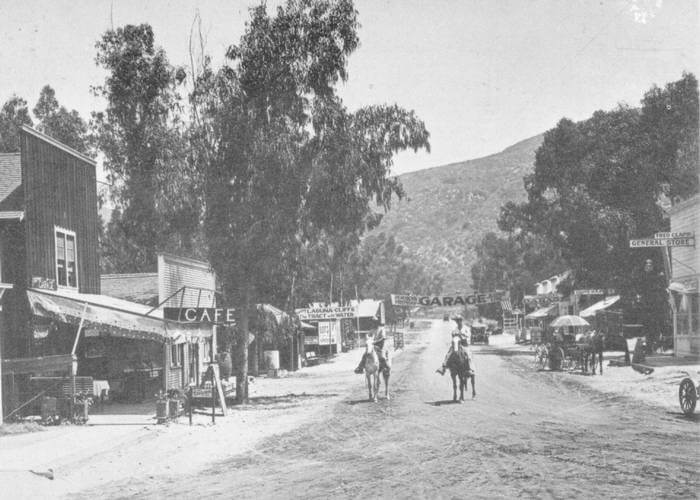
For generations, the eucalyptus canopy has been part of the visual and emotional identity of downtown Laguna Beach. Long before the current streetscape took shape, the trees helped define the experience of arriving on Forest Avenue—the filtered light, the scale they created, and the sense of enclosure that gave the street much of its character.
They were not simply landscape elements. They were part of the architecture of the street. Over time, that canopy became embedded in the collective memory of the community—woven into daily routines, family traditions, and the overall identity of downtown. That is why this moment has felt larger than a standard infrastructure update. For many residents, the conversation has not been about trees alone. It has been about continuity—what should be preserved, what must evolve, and how a city protects the elements that quietly define its sense of place.
Why the response has been so strong
In a city like Laguna Beach, public spaces carry emotional weight.
Residents are deeply connected to the details that define their environment—the scale of a street, the rhythm of a familiar walk, the feeling created by mature landscaping and historic character. When those details change, particularly when they change quickly, the response is often emotional. That is not necessarily resistance to progress. It is a reflection of how much people care.
In many ways, that level of engagement is one of Laguna Beach’s defining strengths. It ensures that change here is rarely passive. It is examined, debated, and held to a high standard—which is part of what has allowed the city to maintain such a strong identity over time.
Why this matters
Projects like this do more than improve infrastructure.
They shape how a city functions—and how it feels.
Forest Avenue has always been one of Laguna Beach’s defining public spaces. How it evolves influences downtown vitality, local business activity, pedestrian experience, and ultimately how both residents and visitors experience the city.
As Laguna Beach continues to invest in its public realm, projects like this reinforce something important: thoughtful change is part of how great coastal communities remain relevant while preserving what makes them special.
Frequently Asked Questions:
Yes. Lower Forest Avenue is being permanently converted into a pedestrian-focused public promenade. The temporary closure first introduced in 2020 is now becoming a long-term downtown improvement project intended to prioritize walkability, outdoor gathering space, and public use.
According to the City of Laguna Beach, the removals followed emergency safety evaluations conducted after a mature eucalyptus tree unexpectedly failed within the construction zone earlier this year. Independent arborists reportedly identified structural concerns, root instability, and long-term safety risks among several surrounding trees, leading to their removal.
Yes. The city has confirmed that new trees are being incorporated into the final landscape plan, including eucalyptus varieties, southern live oaks, and sycamores intended to restore canopy coverage and provide long-term sustainability within the redesigned promenade.
For many Laguna Beach residents, the eucalyptus canopy represented more than landscaping. The trees have framed Forest Avenue for generations and became deeply associated with the identity and atmosphere of downtown Laguna Beach. The response reflects broader concerns about preserving character and continuity as the city evolves.
The city has stated that construction is expected to wrap up in summer 2026, with recent updates targeting completion in late June ahead of the busy summer season.
The permanent promenade project includes upgraded utilities and drainage systems, expanded pedestrian space, new paving and streetscape materials, public seating areas, enhanced landscaping, and infrastructure improvements designed to support long-term downtown use and accessibility.